 By David Abel | The Boston Globe | 12/19/1999
SOSUA, Dominican Republic - Midway through the Shabbat service, after belting out Judaism's most sacred prayer, Benny Katz uttered several words that most Jews would say qualify him as Christian.
With his son shaking a scratchy-sounding noisemaker, his niece jamming on a keyboard and other relatives on a tambourine and on drums, Katz, accompanied by a bouncy merengue beat, blew into a ram's horn and asked his small congregation to repeat after him: "Glorious is Jesus. He is our God!" he chanted, dancing among 15 answering congregants along rows of assembled lawn chairs on an open-air patio next to his home. "Hallelujah, Jesus. We are following your path."
Few statements so succinctly show the assimilation of the second- and third-generation remnants of the once-thriving Jewish community here, historically important because it was accepted in this Caribbean nation when other countries such as the United States turned their back on Jewish migrants during the Holocaust.
Katz is the son of one of the first of 645 Jews to immigrate during World War II to the Dominican Republic's north coast. Thousands more who received Dominican visas left Europe and illegally entered countries such as the United States and Argentina.
While Katz's father's family was never very religious, they were traditional Jews who kept the High Holy Days and believed that the messiah has yet to come. Katz, however, said he believes Jesus was and will be the messiah.
The pattern of assimilation is common worldwide, specialists say.
"I am not worried about there being some assimilation," said Benno Weiser Varon, a Jewish history professor at Boston University who once served at the Israeli ambassador to the Dominican Republic. "In Latin America, this is a minority. There is a strong Jewish community in South America, especially in Argentina.
"But I would accept them as Jewish, even though some very Orthodox rabbis might not."
Like many descendants of the pioneering Jews who in 1940 began taming this patch of raw, tropical jungle into arable land, Katz married a non-Jewish Dominican. Today, however, his wife, Alicia, wears Star of David earrings and leads Shabbat services, singing prayers in Hebrew.
She considers herself and her children Jewish, although she has not formally converted. There are now only a few more than 70 Jews or those who consider themselves Jews living in Sosua, and nearly a quarter belong to the Jews for Jesus sect. Most of the others are secular.
Other than posting traditional mezuzas - small cases containing a Biblical verse - on the doors of their homes, they exhibit few signs of their religion. Katz sees no contradiction between the mingling of Catholic and Jewish traditions.
"We are just as Jewish as anyone else who believes in the Torah," said Katz, 36, a mechanic and motorcycle racer, who wears the traditional skull cap and shawl during the services his family holds each week. "We just believe Christ is our savior."
Katz's 82-year-old father, Martin, one of only two of the 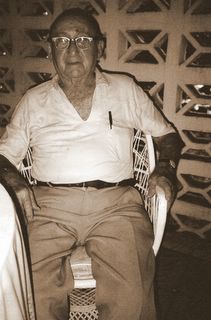 initial Jewish refugees remaining in Sosua, is not concerned about his son's deviation from tradition. Nor is Martin Katz's friend, Arturo Kirchheiman, 91, the other pioneer still living here, who jokingly calls himself "the godfather of Sosua," because he helped develop the town and make it a tourist destination.
Both smiled and shrugged when asked about Benny Katz's nontraditional beliefs. To the two elderly pioneers, both of whom married Catholics and at one time raised pigs to sell as pork throughout the Dominican Republic, assimilation is part of the community's natural evolution.
"My son and his son were bar mitzvahed," said Martin Katz, who still speaks Spanish with a German accent. His son and grandson did their bar mitzvah with a rabbi visiting from elsewhere in Latin America.
"That's enough. Our traditions will continue, even if they change some," Katz added. "But the Jewish community's future in Sosua is not bright. There are so few of us left."
With only 63 cents in his pocket, Martin Katz arrived in Sosua on an Italian ship after fleeing his home near Frankfurt. Before departing from Genoa, Italy, in 1940, the 22-year-old clothing designer had little idea where the Dominican Republic was. He knew, however, that he was one of the lucky ones.
Less than a year later, Kirchheiman, at age 32, sailed from Portugal on the third of nearly a dozen ships that ferried European Jews to Sosua. Months had passed since he had escaped from his Hamburg home, a time passed in hunger, imprisonment, and negotiations for his freedom with German forces in southern France.
Katz, Kirchheiman, and thousands of other Jews mainly from Germany and Austria benefited when the Dominican dictator Rafael Trujillo declared his government would issue 5,000 visas to the stranded European Jews.
Trujillo's generosity - when no other nation would welcome Jewish refugees - remains a mystery. Three years earlier, the Dominican leader had ordered 30,000 Haitians killed in an effort to halt the mainly mulatto Dominican population from becoming darker-skinned. The Jews here say he either wanted to atone for his bloodshed or to help "whiten" the Dominican Republic.
When the Jews arrived, with help from international Jewish organizations, each settler was given 80 acres of land, 10 cows, a mule, and a horse. Although many of them had no background in farming, they learned quickly. Today, Productos Sosua, the Jewish cooperative for which Katz and Kirchheiman worked for many years, produces most of the Dominican Republic's meat and dairy products.
Despite the success in overcoming a dense jungle and surviving multiple strains of malaria, typhoid, and other debilitating diseases, Sosua's Jewish community may not be able to surmount the more benign obstacles of assimilation and migration.
While the community is refurbishing its little-used synagogue and a small museum preserves the early settlers' history, Sosua has evolved from a small farming town to become one of the Dominican Republic's centers of tourism. The tourists, many of whom are German, come to enjoy Sosua's beach and aquamarine bay.
Most of the Jews who arrived here and their descendants have moved to the capital, Santo Domingo, or immigrated to Miami and New York. Only 300 Jews remain throughout the Dominican Republic.
Benny and Alicia Katz, despite their belief in Jesus and the New Testament, say they are upholding his father's traditions, observing Shabbat on Friday nights and High Holy Days such as Yom Kippur, the Day of Atonement, and Rosh Hashonah, the Jewish New Year.
Benny only recently found Jesus. Driving home a few years ago on one of the Dominican Republic's perilous mountain roads, Katz said he had heard strange voices in his head telling him he would not make it back to Sosua.
So he called on Jesus for help.
"I said, 'Jesus, if you help me get home safely, I will serve you the rest of my life,' " Katz said. "It's what has kept our family together."
David Abel can be reached at dabel@globe.com.
Copyright, The Boston Globe
Recession, Jet Crash Rein in Hot Economy
By David Abel | Globe Staff | 11/18/2001
BOCA CHICA, Dominican Republic - Over the past decade, an infusion of malls, fast-food joints, and high-rises made parts of the capital look like Miami. A modern, four-lane highway replaced dangerous, potholed roads connecting the north and south. And an ever-increasing number of cranes above tourist resorts and cities led some here to joke that the country had a new national bird.
Long beset by poverty and political corruption, the Dominican Republic economy had become the fastest growing in Latin America. The average annual income here never rose above $2,400, but in the 1990s thousands of people found jobs in newly created free-trade zones, billions of dollars sent from relatives in New York and Boston helped build additions to countless numbers of homes, and inflation and unemployment levels dropped. Last year the country's economy boasted a record 8 percent growth.
The party came to an abrupt end after three blows in swift succession clobbered the economy.
Last winter, the onset of a global recession put brakes on the boom. The terrorist attacks on Sept. 11 instantly cut the twin bulwarks of the economy, tourism and money sent from New York. And on Monday, the 8 million people of this Maine-sized nation saw hopes of an economic rebound vanish with the crash of American Airlines Flight 587.
"When the United States sneezes, the old joke here goes, the Dominican Republic catches the pneumonia," said Gary Clements, the chief economic officer at the US Embassy in Santo Domingo. "These are such unprecedented events that it's hard to know how things will turn out."
After 10 years combing the beaches here with suitcases full of amber rings and silver necklaces, 32-year-old Toni Quintero says he's looking for a new line of work. Selling trinkets to tourists just hasn't paid off in the past two months.
"The drop has been massive. Business is down 70 percent," he said. "There's no one here anymore - and I blame it all on [suspected terrorist Osama] bin Laden. He's killing us, too."
Felix Incarnacin had long made the hourlong trip here from Santo Domingo to hawk his cigars and pipes at a street fair, but now he isn't sure it's worth the gas anymore. In 11 years living off tourists, the 24-year-old has never seen business dry up like this. "It's the worst it's ever been," he said as he tried to lure the few tourists here from the other vendors.
The triple hit to the economy has all but gutted the country's growth.
Economists here say the nation should still muster about 2 percent growth for 2001, but their forecasts range from negative to zero growth in 2002.
On an island where blackouts in cities are as common as zinc-roof huts in the countryside, the abrupt recession has had brutal consequences.
Desperately needed roads that had been planned won't be built. Officials have suspended projects to complete new airports and hydroelectric plants.
Plans to build homes and offices have stopped midway through construction. And many needed services and other plans will be cut back or abandoned throughout the country.
"This is really a tragedy for such a well-performing economy," said Frederic Emam-Zade.
He served as deputy secretary of state under the last president, Leonel Fernandez, whom many credit with ushering in genuine democracy in the Dominican Republic. That move toward democracy continues under current president Hiplito Meja.
Now an economist at a local think tank, Emam-Zade says he's trying to remain optimistic: "This is a shakeout. We will learn from it and be more competitive when it's over."
But others are less sanguine - especially those in the hotel industry, which is feeling the full brunt of the economic downturn. Since Sept. 11, at least 30 hotels have closed, those in the industry here say.
For those remaining open, staffs have been cut back significantly over the past two months, and two economists estimate that 30 percent of tourists who planned to visit for the holidays next month have already cancelled their reservations.
In Boca Chica's largest and oldest hotel, Coral Hamaca, more than 200 of 630 rooms were unoccupied this week, a large number of vacancies for a hotel whose occupancy rate usually tops 90 percent this time of year.
Last year, tourism increased 15 percent from the previous year, the average growth rate in recent years. But now, under even the best-case scenario, tourism will pump $2.8 billion into the Dominican economy for 2001, marking a 2 percent decline from last year and the first time in many years that tourism would have failed to grow.
"We've become part of the global economy," said William Malamud, executive vice president of the American Chamber of Commerce in the Dominican Republic. "It has brought wealth to the DR, but when there's a dive in the global economy, we take the dive, too."
The tourists may have thinned out, but the merengue, salsa, and bachata music are still blaring. The pina coladas are flowing from the stocked bars by the white-sand beaches. And the ebullient staff at resorts here are ever present, beseeching tourists to play volleyball or watch a live show.
For more years than he can remember, Johnny Velez has been greeting tourists with a wide grin and sending them off on whitewater rafting trips in the country's mountains, on helicopter and horseback rides, and on diving tours in the aquamarine waters surrounding the lush two-thirds of the island the Dominican Republic shares with Haiti.
There are certainly fewer Germans, French, and Americans here now, but Velez says he is confident they'll be back in droves soon enough.
"They'll want to escape the cold," he said with a smile. "That's a desire immune to terrorism, I hope."
Previous Day's Story:
AGONY OF VICTIMS' FAMILIES MOVES ACROSS DOMINICAN REPUBLIC
By David Abel | Globe Staff | 11/15/2001
THE CRASH OF FLIGHT 587 / A DOMINICAN TOWN MOURNS
BANI, Dominican Republic - Most were coming down for the nine-day annual fiesta to celebrate their town's patron saint. Instead, the feasts that began Monday were abruptly canceled, the bouncy music usually blaring from every bodega was silenced, and the processions through the narrow, centuries-old streets are now to mourn the dead.
On one corner here a man wearing a tattered T-shirt with faded letters spelling "Jamaica Plain Community Center Day Camp Staff" strolled over to a sign bearing a list of names, shook his head a few times, and said he couldn't find the words to express his feelings.
The sign listed the names of the more than 200 Dominican passengers who died on flight 587 - 41 of whom officials here believe were born in this Dominican town about 40 miles west of Santo Domingo.
"We were hit the hardest of anyone in this country - and it's not easy," said Bani Mayor Daniel Alvarez whose hilly town of 120,000 people is the source of more Dominicans living in Boston than any other part of the Dominican Republic. "This is a tragedy that came so quick and affected so many here that it's still hard to believe."
Nearly everyone here knows a neighbor, cousin, or friend who died Monday when the American Airlines flight dropped out of the sky shortly after takeoff in New York.
Government officials say 30 families in Bani lost relatives. Few could mistake the sorrow in the streets. On Monday, Dominican President Hipolito Mejia ordered the nation to observe three days of official mourning. Here, that meant all the shops set up to sell food, toys, and party gifts to honor La Virgen de La Regla were closed and the town's plaza looked like an empty carnival.
Few here could be deaf to the sobbing that echoed over the past three days from dozens of verandas like the one at Ramona Amparo Pimentel's well-furnished home.
Her son, Viky Andrew Pimentel, was in the middle of a two-hour drive to Las Americas International Airport to meet her when a radio bulletin nearly made him drive off the potholed road. He raced to the airport and immediately called relatives in New York, who told him his mother was aboard the flight.
"It was absolutely terrible, terrible - it was her birthday, she turned 55 on Monday, and we had a big cake for her," he said.
Another surviving child, Jitte Gool Pimental, with tears welling said, "She kept saying she didn't want to fly. It was like an omen or something."
Pimental was returning home after a two week visit to a brother in Brooklyn and a niece in Jamaica Plain. Like many Dominicans who live in the United States to earn a living, she decided to retire in the Dominican Republic. But she didn't want to lose her residency status and made sure to visit the United States several times a year.
The matron of a large, far-flung family who owned a bodega in Brooklyn, Pimental often helped support her children and cousins and many of them comforted each other yesterday in her open-air living room.
A similar misery filled the home a few blocks away of Altagracia and Mercide Sanchez. The couple lost two of their four children. Jose, 36, and Elvis, 34, both worked at an uncle's bodega in Washington Heights and both were married with children.
Nearly a dozen neighbors and friends sat on rented chairs in the Sanchez living room and grieved with the retired couple, who had also worked for many years in New York. The two said American Airlines is flying them to New York today so they can help identify the bodies of their sons and bring them home.
"I was cooking for them when I heard the news - and I haven't had any peace since," Altagracia said. "They always loved to be down here this time of the year and they would always go out and dance and see old friends. It's hard to believe they won't be here anymore, too hard."
Two blocks away, Juan Antonio Brito couldn't stand the constant crying in his house so he went to his outdoor, dirt-floor autoshop and worked at repairing an old engine rather than mourning the loss of his 53-year-old sister, Margarita Reina.
"This town doesn't deserve this," he said.
David Abel can be reached at dabel@globe.com.
Copyright, The Boston Globe
By David Abel | Globe Staff | 11/14/2001
THE CRASH OF FLIGHT 587 / THE VICTIMS
SANTO DOMINGO, Dominican Republic - Hurricanes have walloped this small, lush country; buses sometimes plunge off rickety mountain roads; and political conflict once regularly erupted in bloodshed, but Dulce Mateo has never seen a tragedy here of this magnitude before.
"Not in such an instant, without any warning, and with so many dead," said Mateo, who lost her 53-year-old sister-in-law, Virginia Mateo, and her 6-year-old nephew, Steven Lora, in the crash of American Airlines Flight 587 minutes after liftoff Monday morning from New York's John F. Kennedy Airport.
"This is a small island," said Mateo, the owner of a small jewelry shop outside the capital.
"Nearly everyone knows someone who was on that flight."
The Dominican Republic has not been immune to airplane crashes, but in the past, many of those who died in such crashes here were tourists.
American Airlines officials say 175 of the 256 passengers on board Flight 587 carried Dominican passports. Yet the vast majority of the others who died, officials here say, were Dominicans who moved to the United States and became US citizens.
"This is a grand tragedy without precedent for us - in human, social, economic, and political terms," said Luis Gonzales, spokesman for President Hipolito Mejia, who on Monday declared that the nation would observe three days of official mourning. "It is especially hard after Sept. 11."
Among the thousands who died in the terrorist attacks against the World Trade Center were 41 Dominicans. And one of those who survived the collapse of the Twin Towers, a 26-year-old Au Bon Pain clerk named Hilda Yolanda Mayor, died aboard Flight 587. Among the others whose lives were lost were Rafael Ravelo, a candidate for mayor in a town outside of the capital, and Cucu Balou, one of the nation's most famous meringue musicians.
The impact of Monday's tragedy, officials here say, is not confined to the families who lost loved ones.
Millions of dollars here have been lost since Sept. 11 as tourism dropped off by as much 10 percent nationally and by 30 percent at some of the nation's top resorts. Tourism from Europe, Canada, and the United States had started picking up again in the past few weeks, but in the past two days many travelers have canceled their plans. Officials here now believe that fear of flying may cut into the Dominican Republic's busiest tourist season: Thanksgiving week and the Christmas holidays.
Others are concerned about the financial health of an already reeling American Airlines, the largest US air service with regular flights to the Dominican Republic. Dominicans are concerned that if the airline decided to cut flights here as a cost-saving measure, they would feel isolated. On an island about 1,000 miles southeast of Miami, airplanes are the only practical way for most people to travel outside the country.
"We have many concerns now because this is without doubt the largest tragedy of modern times for this country," said Bernardo Vega, who served as Dominican ambassador to the United States until two years ago and is now editor of one of the country's largest newspapers, El Caribe. "We have now been double punched and we are hoping to be able to get back up. This one hit very close to home."
The last major air crash here occurred in 1996, when shortly after takeoff a Turkish charter flight fell into the ocean near the northern city of Puerto Plata, killing 189 mostly German passengers. In 1992, 34 passengers on a Cuban plane died on their way to Havana when their flight slammed into a mountain. The only previous large air crash occurred in 1970 when a Dominicana Airlines plane crashed on its way to Puerto Rico, killing 44 Dominicans.
Dulce Mateo has no interest in comparing tragedies. Like many of the victims' families here, she has been too busy fighting tears over the past two days.
The 45-year-old, who lives near the resort town of Boca Chica, has spent hours at Santo Domingo's Las Americas International Airport seeking information from American Airlines. She has been to a nearby hotel where American has brought in scores of psychologists and crisis managers from Miami and San Juan. And she is planning a visit to the US Embassy, where scores of Dominicans have provided DNA samples to identify family members and have sought visas to fly to New York.
For now, Mateo is just waiting for the bodies of her sister-in-law and nephew.
"Nobody should have to go through this," she said as she left a meeting with psychologists yesterday.
Initial Crash Story:
SHOCK AND UNCERTAINTY COEXIST WITH A YEARNING FOR MIRACLES
By David Abel
11/13/2001
SANTO DOMINGO, Dominican Republic - By the time Cecilia Vega arrived in the cavernous terminal of the capital's Las Americas International Airport, there was little doubt about what had happened yesterday.
The crying and screaming and hugging had been going on here all day, as relatives of the victims on American Airlines Flight 587 trickled into the seaside airport.
It was nearly 9 p.m. when she finally made it here from her modest home in the southern province of San Cristobal, and she wasn't quite sure what to do. Her 40-year-old sister, Zeneida Vega, was on the flight. As she spoke, her eyes welled with tears.
"She has four children, four children," she said shaking her head. "It can't be."
No one survived the crash. American Airlines officials here said that about 90 percent of the passengers - or 221 people - were Dominicans.
But they wouldn't release a list of names last night and airline officials sent family members to a private room in the airport. Later, many of the family members were taken to a private hotel about 20 minutes away from the airport, where Dominican officials set up a bereavement center.
In a statement broadcast on TV, Dominican President Hipolito Mejia expressed his "deep sorrow."
The island's biggest baseball sports hero, Chicago Cubs slugger Sammy Sosa, was home yesterday and released a statement on Major League Baseball's Web site.
"My country is devastated," he said. "Today is my birthday - now I will associate tragedy with my birthday. So many Dominicans as well as Americans lost their lives today."
Dominicans here said they believed a group of popular merengue singers were on the flight and many said this was a double whammy, after many of their countrymen perished during the attacks on the World Trade Center.
"Why us?" said Danny Plata, a 54-year-old taxi driver who spent the day at the airport watching family members of those killed walk in and collapse in tears. "We have hurricanes and poverty. Do we need more?"
For Cecilia Vega, the day was a long, bumpy drive from her home, which she said had been spruced up with gifts from her sister. Zeneida had lived in Manhattan the past 12 years and frequently visited her family here.
She was the lifeline for Cecilia, sending her and her relatives hundreds of much-needed dollars every year. Now, as the holidays approach, Cecilia said she wasn't sure how the family would get by and how she would break the news to her children and her sister's children.
"Maybe there was a miracle," she said. "I believe in miracles."
David Abel can be reached at dabel@globe.com.
Copyright, The Boston Globe
By David Abel | Globe Correspondent | 12/28/1999
JARABACOA, Dominican Republic - The gushy ballad lilting from the radio as the compact car cruises slowly down the street does not attract the women as much as William's whistling does.
Two girls in skin-tight clothes, idling beside a wooden shack, smile back at him. And William, a recently married 30-year-old whose wife is expecting a child in February, explains why a married man is entitled to a few girlfriends.
"A man needs more than one woman," says William, a sales clerk who would be identified only by his first name. "The women understand. We have our needs."
If some women turn a blind eye, health officials do not. Infidelity, they said, is one of the leading reasons for the spread of AIDS in this poor Caribbean nation, which has one of Latin America's highest percentages of people carrying HIV.
In private, some married men compare their mistresses to branch offices, while their wives are the main office. If he has the means, a man here might provide his "sucursal" - in Spanish, literally, a "branch office" - with a home, an allowance, and even children.
Although the practice is widespread, and women are well aware of it, many wives are in the dark about their husbands' lovers. And for health officials trying to control sexually transmitted diseases, the prevalence of surreptitious affairs makes it even harder to fight diseases such as AIDS.
"The main victims, and the fastest-growing class of AIDS victims, are married women," said Martha Butler, director of the National Program of Control of AIDS and Sexually Transmitted Diseases. "The problem is that they think they have nothing to worry about. Married couples don't use condoms."
Although Dominican Health Ministry studies have found that more than 50 percent of men have extramarital affairs, Butler said, the surveys may understate the reality. A similar study in 1996 by the University of Chicago found that 22 percent of men in the United States admit having affairs. But people tend to lie when asked if they have had sex outside of marriage.
Few Dominicans receive sexual education. And according to a study released in October by the Health Ministry, 44 percent of boys and 36 percent of girls have had sexual intercourse by age 14. So few used condoms, the survey found, that at least 78 percent of the girls became pregnant, most of them in isolated rural towns such as Jarabacoa.
But what troubles health officials most is that 84 percent of teenagers surveyed said they believed they could not catch AIDS.
"People are just not conscious about the disease; they think they are invulnerable," said Carmen Capell, director of a health clinic in Santo Domingo that treats AIDS patients. "The guilt lies with the state. We have to educate people more, and that starts in the schools. But it's something taboo. People here are just embarrassed to talk about it."
Since 1986, more than 4,750 Dominicans have reported being infected with HIV, and hospitals across the country have recorded more than 4,890 AIDS patients, according to the Health Ministry.
Today, more than 100,000 people, 2.8 percent of the 8 million Dominicans, carry HIV. By 2005, the number is expected to climb to at least 3.3 percent of the population, and an increasing number of them will be married women. The Dominican figures compare to a worldwide adult HIV-infection rate of 1 percent for adults and 0.76 percent in the United States.
Furthermore, international agencies believe the AIDS problem is much worse than the Health Ministry reports."We are sure there are many people going around with AIDS and they don't know it," said a United Nations AIDS official in the Dominican Republic who asked not to be named. "We feel underreporting is as high as 60 percent."
The incidence of AIDS in the Caribbean is second only to that in sub-Saharan Africa, where the virus has been reported in about 8 percent of the region's population, according to a recently released UN report. Nearly 2 percent of the Caribbean region's population is HIV-positive; Southeast Asia, with less than a 0.7 percent HIV-positive rate, has the next-highest percentage of carriers.
In the Dominican Republic, where nearly as many women as men are now HIV-positive, infidelity, ignorance, and the church's opposition to condoms are among the main reasons for the climbing AIDS rate, health officials here said.Prostitution is another. The Health Ministry estimated more than 200,000 women and men work as prostitutes. They mainly operate off the nation's booming tourism industry, which grew nearly 10 percent in the first eight months of 1999, according to government statistics.
Officials, however, said prostitution is only a small part of the problem, as most of the prostitutes have been educated to use condoms. The real danger, they say, is for those who think they have nothing to risk.
"Most Dominicans have extramarital affairs, that's a big problem for AIDS here," said Francisco Ferreira, director of education for COIN, a private group that counsels prostitutes on the dangers of AIDS. "This is part of the machismo culture, and it's something very difficult to change."
Cruising through Jarabacoa, William points out where the local prostitutes meet their men. But he laughs when asked if he has sought their services.
"I've got the magic; I don't need prostitutes," he says. "Girls love me. If I get bored, I'll find another."
David Abel can be reached at dabel@globe.com.
Copyright, The Boston Globe
By David Abel | Globe Staff | 11/10/2004
LIMA – At the southern edge of this enormous city, atop a cliff jutting over the Pacific, an old, dilapidated mansion holds evidence of the often indiscriminate violence that plagued Peru for 20 years and left some 70,000 people dead.
The evidence comes in the form of hundreds of harrowing photos documenting the assassinations, torture, and bombings, among other crimes, that rent Peru between 1980 and 2000 as state security forces battled Maoist rebel groups.
The large, mainly black-and-white photos, which cover the pockmarked walls of 27 rooms, range from discreet to gory. Together, reflected in the eyes of campesinos, soldiers, and rebels, they tell the story of how this Andean nation unraveled.
As moving as it is, what’s most impressive about the museum is that it exists. Unlike other Latin American nations torn by violence over much of the same period, Peru is the only with such an exhibit.
The year-old exhibition – commissioned by the government’s Truth and Reconciliation Commission and called “Yuyanapaq,” or “To Remember,” in the Quechua language of much of Peru’s indigenous population – starts in the back of the house, where curators left the old walls in disrepair.
“The house speaks to us – its walls and structure tell a story of destruction that allows us to make an analogy between it and Peruvian society,” the curators wrote of Casa Riva Aguero, the mansion now owned by the Catholic University in Lima.
The first rooms take visitors to the 1970s, where large photos show how leftist groups such as the Shining Path and, later, the Tupac Amaru Revolutionary Movement tramped across the nation’s rural highlands, torching ballot boxes and hanging dogs from lampposts.
After a timeline and video of the conflict, the exhibit unfolds chronologically, with photos of the distraught widows of murdered policemen; one woman in traditional garb wailing over the body of a dead relative; two chapped, soiled hands holding a tiny black-and-white picture of a lost farmer.
Some rooms focus on specific fronts of the conflict – the polarization of the universities, the bombs in the cities, the massacres in mountain villages. One room features the voices of survivors telling their stories. Another has a wall covered with a massive picture of a city building destroyed and a man rolling up the picture of the nation’s president after a Shining Path attack.
On a Web site accompanying the Truth Commission’s 5,000-page report about the conflict, Salomón Lerner Febres, the commission’s president, wrote that many of the photos could carry the following caption:“Let the horror be gone forever, the painful memories converted to hope. Let life in Peru go on with solidarity and justice.”
David Abel can be reached at dabel@globe.com.
By David Abel | Globe Staff | 5/05/2002
It was an ominous, if all-too-familiar image for Latin America: Flanked by a row of stern-faced military men, their golden epaulets and brass medals shimmering in television lights, the newly installed "transitional leader" lauded the arrest of the nation's democratically elected president and decreed the dissolution of its legislature, supreme court, and constitution.
At the same time last month, and as familiar and ominous for many throughout this coup-plagued region as the scene playing out in the presidential palace, another US government was making friendly overtures to the latest group of generals and civilian elites to grab power in Latin America. Earlier on that chaotic day in Venezuela, the US State Department issued a statement praising the military and blaming the bloody turn of events on the nation's ousted president, Hugo Chavez.
Almost immediately, from Havana to Mexico City to Buenos Aires, headlines decried US imperialism. Reports of meetings between US officials and opposition leaders led to rumors of CIA involvement and shadowy US military attaches calling the shots from local military bases.
With memories of US complicity in the toppling of elected governments in Chile, Guatemala, and the Dominican Republic, politicians throughout Latin America had good reason to question the depth of Washington's support of democracy. Critics around the world blasted the Bush administration for hypocrisy. If Chavez wasn't an outspoken leftist who had befriended Fidel Castro and Saddam Hussein, among other snubs to Washington, they asked, would the administration have welcomed his overthrow?
The criticism hit the mark, especially after a counter-uprising returned a triumphant Chavez to the presidential palace within 48 hours. The Bush administration denied any role in engineering his ouster and withdrew support for the transitional regime.
But was the administration right from the beginning? After all, the military chiefs refused to fire on their own people. Television images from the mass demonstrations on April 11 showed Chavez supporters firing on unarmed marchers, killing at least 17 and wounding more than a hundred. And with his radical policies and growing disregard for democratic checks and balances, few argue that Chavez didn't, as the State Department said, "provoke" the crisis.
Moreover, Chavez, a former paratrooper jailed after leading a bloody coup attempt in 1992, had already dismantled much of the democracy that brought him to power.
A mestizo promising to help the poor, Chavez won a landslide victory at the polls three years ago. Riding a wave of popularity, the charismatic leader oversaw the writing of a new constitution, which allowed him to stay in power more than twice as long as under the previous one. He forcefully dissolved the congress and replaced it with a new national assembly stacked with friends, fired all the supreme court justices and appointed his allies, politicized the military and armed groups of urban supporters.
Given the events that led to Chavez's fall from power before dawn on April 12, including rallies of hundreds of thousands of people, was what occurred a coup or a popular uprising?
"There was no secret plot, as was the case when Chavez led a military assault against the government in 1992," says Ricardo Hausmann, the former chief economist of the Inter-American Development Bank in Washington and a former government minister in Venezuela who now teaches at Harvard's Kennedy School of Government. "These were mass demonstrations."
Unlike a traditional coup in which civil liberties are taken away, Hausmann and others argue, the opposition rose up to defend and promote them.
"Like Fujimori in Peru, this was a neo-authoritarian regime - elected and using democratic means to take over all public power," says Carlos Blanco, a columnist for the Venezuelan newspaper El Universal and another former government minister now at Harvard. "What happened . . . was an uprising against authoritarianism."
Both Hausmann and Blanco, however, argue the uprising was "hijacked" when Pedro Carmona, the head of Venezuela's top business association appointed by generals as the nation's transitional leader, dissolved the national assembly and supreme court - rash, unpopular decisions that helped speed Chavez's return to power.
Yet with his support in polls below 30 percent and a restive population thronging around the presidential palace, they and others justify the pressure on Chavez and his Cabinet to resign.
To others, such overt military pressure on a fairly elected president represents the difference between a coup and a legitimate overthrow of an authoritarian regime. Instead of asking Chavez to resign with a gun pointed to his head, they argue, the opposition should have followed the constitution and acted against the president in the congress or the supreme court.
"This was absolutely a coup," says Arturo Valenzuela, director of Western Hemisphere affairs in the Clinton administration who now oversees the Center for Latin American Studies at Georgetown University. "They didn't resort at all to constitutional order. If Chavez resigned, power should have gone to the vice president."
Although they acknowledge Chavez's bent toward authoritarianism, Valenzuela and others criticize the Bush administration for applauding a coup.
"If Chavez did order his supporters to shoot protesters, as the opposition contends, then the military had justification to arrest him," says Jennifer McCoy, a Venezuela specialist and director of the Americas Program at the Atlanta-based Carter Center. "But does that justify overthrowing the whole government? Absolutely not."
Those who support the Bush administration's response to Chavez's brief ouster, however, argue that at the time it appeared as though Chavez had been swept from power in a fashion similar to the toppling of elected autocrats like Slobodan Milosevic in Serbia or Peru's Alberto Fujimori.
The military's intervention came at a time of chaos, they argue, after the president ordered troops and tanks to confront the thousands of protesters nearing the presidential palace, after men wearing Chavez's trademark red berets were seen on live television spraying bullets at the opposition, and after General Lucas Rincon, chief of the armed forces and one of the president's most trusted allies, publicly confirmed Chavez's resignation.
"There's no question this popular uprising looked like a coup - and that it eventually became one because of stupid, illegitimate decisions that led the new regime to collapse," says Hausmann. "But what happened was a mess of Chavez's own creation. The armed forces behaved professionally in refusing his orders and the Bush administration was right from the beginning: Chavez provoked the crisis and he lost control of it."
David Abel can be reached at dabel@globe.com
Copyright, The Boston Globe
By David Abel | Globe Staff | 7/30/2002
GUATEMALA CITY - Pope John Paul II arrived yesterday in this volcano-ringed capital and declared himself "a pilgrim of love and hope" in a nation where the Catholic Church is revered by some and reviled by others for its role during a 36-year civil war.
The ailing 82-year-old pontiff, who had been able to walk up the stairs to his plane in Toronto, used a hydraulic lift to descend from the plane and then a motorized cart to go the few feet to a podium. Using a cane and the arms of two bishops, he eased himself onto a throne, shut his eyes, and clasped his head in what appeared to be complete exhaustion.
Then, under a warm afternoon sun at the start of a 6-mile carpet of flowers leading from the airport to the city center, he addressed a welcoming party of presidents, cardinals, and dignitaries from all of Central America.
"I come here as a pilgrim of love and hope," he said in Spanish. He said he hoped his visit would be "a true moment of grace and renewal for Guatemala" and help the country search for "peace, solidarity, and justice."
The pope's two-day visit, his third to Guatemala, comes at a tense time for the nation's Catholic Church.
Although the civil war ended six years ago with a peace treaty, officials in the church have received an increasing number of death threats in recent months as they have sought to expose atrocities allegedly committed by the nation's military during the conflict.
The tension here is also religious. More than a third of this impoverished country's 13 million people - a greater proportion than anywhere in Latin America - are now Protestant, and some have voiced complaints in recent weeks that the government has spent millions of dollars on the pope's visit.
Still, a crowd estimated at 1 million lined the route from the airport yesterday, waving yellow and white Vatican flags, blowing kisses, and screaming with elation "Juan Pablo, Juan Pablo" as the pope slowly passed, waving from his glass-encased popemobile.
"For too long, there has been confrontation and division in our country," said the Rev. Juan Carlos Cordova, a spokesman for the Guatemala City Archdiocese. "The pope is bringing a message of peace - that the conflict has to stop and solutions must be found to prevent any resumption of war."
The pope's first visited Guatemala in 1983, at the height of the civil war, when entire villages were being wiped out in the fighting. Many here credit the pope's second visit, six years ago, with helping push the guerrillas, paramilitaries, and government to make peace. But the peace hasn't stopped all the intimidation and killing after the region's bloodiest war, which claimed more than 200,000 lives from 1960 to 1996.
Even after the peace accord, the church has been targeted. In 1998, Juan Gerardi Conedera, a senior bishop, was murdered shortly after publishing a report that pinned nearly all the blame of war crimes on the nation's military and pro government paramilitary groups.
In recent weeks, death threats have been leveled against a bishop, six priests, and officials in the church human rights office. In February, a Catholic church that contained records and equipment to analyze the remains of massacre victims was burned to the ground. And last week, after a spate of vandalism at churches and human rights offices, shots were fired at the courthouses where three military officers were appealing their convictions in Gerardi Conedera's death.
Sparking fears that the civil war could re-ignite, paramilitary members in June took over all the roads in a northern province to demand back pay for their wartime service. The ruling party, led by some of the men who ruled during the most bloody phases of the civil war, promised to consider a new national tax to raise $2,500 per paramilitary member.
The heart of the pope's visit is the creation today of Central America's first saint, Pedro de San Jose Betancur, a 17th-century Franciscan friar who was beatified two decades ago for establishing a hospital in Guatemala's old capital that treated poor Mayan Indians, prisoners, abandoned children, and the handicapped.
All around the capital, posters of the pope and "Hermano Pedro" - who the Vatican says cured people of terminal diseases - hung from lampposts, homes, and stores shuttered for the duration of John Paul's visit.
"I'm sure the pope is aware of the state of the country and wants to keep the government on the road to peace, but the prime motive of his trip is evangelical," said Stephen Pope, chairman of the theology department at Boston College. "He's trying to spread the faith in a country where more and more people are leaving for Protestantism."
To some Protestants, however, the canonization is a thinly veiled effort at blunting their gains.
"There's no doubt he's trying to convert people, and we see this whole visit as a sad situation," said David Munguia, president of the Evangelical Alliance of Guatemala. "I'm worried his visit will just divide the people."
"What I want to know," said Ingrid Pirir, 24, a teacher at the Evangelical Church of New Jerusalem in Guatamala City, "is this: Where's the government getting the money to spend millions of dollars on one man when so many are suffering in this country?"
Not all Protestants, however, view the pope with hostility. As long as he talks about peace and respects their faiths, they say they don't mind his visits.
"Yes, we are different and we don't take our cues from the Vatican, but we don't feel any bad feelings toward the pope," said Julio Cesar Paz, pastor of La Iglegia Evengelica Central, which 120 years ago became the first Presbyterian church to open in Guatemala. "We think he's a good man and can help this country."
Along the route to the city yesterday, the throngs had wanted simply to get a glimpse of the pope. As vendors sold key chains, balloons, and T-shirts emblazoned with the pope's image, more than 1 million people jostled for front-row spots to see the ailing man in the white mozzetta.
Sprinkling water to mat down a section of the elegant carpet of pine needles, chrysanthemums, geraniums, and colored sawdust, Patricia de Morales was beaming.
"This is so beautiful for us, that he chose to visit us again in the last years of his life," said Morales, 39, who arrived like countless others before dawn to arrange the carpet. "This is just really huge for all of Guatemala."
The pope, who is on an 11-day tour of the Americas, flies to Mexico today following Mass.
David Abel can be reached at dabel@globe.com.
POPE INSPIRES GUATEMALA, NAMES FIRST SAINT IN CENTRAL AMERICA
By David Abel | Globe Staff | 7/31/2002
GUATEMALA CITY - Pope John Paul II, nearly overcome by weariness, canonized a 17th century Spanish missionary as Central America's first saint yesterday during a Mass before half a million jubilant Roman Catholics.
When he spoke, the pontiff's Spanish was slurred and he took long pauses. The pauses were met with near silence.
But when John Paul, who suffers from Parkinson's disease, arthritis, and knee and hip ailments, finished canonizing Pedro de San Jose Betancur, the crowd at the old racetrack erupted. The Guatemalans waved flags, sent balloons aloft, and chanted their love for the pope.
"The new saint represents an urgent appeal to practice mercy in modern society, especially when so many are hoping for a helping hand," the 82-year-old pontiff told followers who skipped sleep Monday night to secure a spot in the stadium. "I am convinced of the present day importance of his message. He was truly a brother to all who lived in misfortune."
The pope's elevation of Betancur was his 463d of his nearly 24-year papacy. "Father Pedro" ministered to prisoners, Indians, orphans, and the poor. He also founded the world's first hospital for convalescents, and established the House of Our Lady of Bethlehem, which grew into the Bethlemite religious order.
"We can't find the adequate words to say what this miracle of love and happiness means for Guatemala," said Guatemala's archbishop, Rodolfo Quezada.
The pope, who left Guatemala for Mexico yesterday after only 25 hours in this smoggy, volcano-ringed capital, rode around the stadium in his popemobile. Then he used a motorized cart and the help of several bishops to take his seat on an ornate throne in front of a flower-draped altar for the Mass.
Also at the Mass, Quezada pronounced Juan Jose Gerardi a martyr. Gerardi, a Guatemalan bishop, was bludgeoned to death in 1998 after blaming the military for the majority of war crimes during the nation's 36-year civil war.
The majority of the 200,000 who died during the civil war were indigenous Guatemalans. The Indians appeared to be the majority at yesterday's Mass, and the applause was loudest when John Paul told them:
"The pope does not forget you and, admiring the values of your cultures, encourages you to overcome with hope the sometimes difficult situations you experience. . . . You deserve all the respect and have the right to fulfill yourselves completely, in justice, integral development, and peace."
The message resonated with Delores Jochola Patzun, 39, who with 12 family members arrived at the stadium Monday afternoon from a small town along the Pacific coast. None of the family had slept, but they watched every expression of the pontiff and they only had praise for him. "We're very lucky to have him visiting Guatemala for the third time," she said. "And we thank him very much for giving us this saint."
Although they don't doubt his benevolence, some question the value of making Betancur a saint in 21st century Guatemala. "Guatemalans today could use a saint more in tune with their own times," said Catherine M. Mooney, a Guatemala specialist who teaches at the Weston Jesuit School of Theology in Cambridge, Mass.
Some among this nation's growing number of Protestants say that the canonization was a thinly veiled attempt to blunt their evangelical efforts.
Regardless, the ceremony yesterday brought much of this nation of 13 million to a standstill. Stores across the capital were shuttered. Schools and offices closed around the country. And local television stations broadcast the pope's words live.
As a gesture of good will on behalf of a request by the pope, Guatemala's president, Alfonso Portillo, sent a proposal to Congress on Monday to eliminate the country's death penalty. There are 36 people on death row.
For some, the pontiff's visit was tinged with sadness as they worried that they may never again see him. "We love him - he has been very good to Guatemala," said Juventina de Batreiz, 40, noting the pope's help in pushing the country toward peace in 1996.
Just as the pontiff was finishing his remarks - saying, "Guatemala, I carry you in my heart" - there came a sign that many in the crowd took as a devine signal. Appearing like a halo, a rainbow made a complete circle around the noontime sun.
"It's a miracle," Maria Escobar, 42, said as she left the stadium with her husband. "What else more could we ask for?"
David Abel can be reached at dabel@globe.com.
MILLIONS IN MEXICO CITY STRIVE TO GLIMPSE POPE
By David Abel | Globe Staff | 8/01/2002
MEXICO CITY - They hung from trees, crowded onto rooftops and balconies, and some scuffled for front-row views along the boulevards of this massive city.
Walking, hitching rides, and flying in from all over this staunchly Catholic country, more than 4 million people thronged into the streets to glimpse Pope John Paul II, bringing much of this smoggy, car-choked capital to a standstill. The pontiff waved wearily to onlookers as his motorcade brought him to and from the Basilica of Guadalupe, where he canonized the Americas' first indigenous saint.
Maria Morales spent hours crammed into a small truck traveling from a northern state. Though she arrived a day before and hoped to attend the Mass yesterday, the 35-year-old robed nun wasn't one of the 22,000 able to enter the sprawling basilica.
Instead, with millions of others, she took a yellow and white Vatican flag and settled for a spot along the 10-mile path the pope took from the basilica to the capital's apostolic nunciature.
"It was quick, but it was definitely worth the trip," said Morales, after the popemobile passed her, moving more quickly than it had on other visits, she and others said. "Just to see him - that's all I wanted."
The city organized more than 200,000 volunteers and some 35,000 police officers to keep the streets clear as the pope made his way around Mexico City, police officials said. Government workers planted flowers, spruced up battered streets with fresh paint, and erected large screens at closed-off intersections around the city to let people watch the pope's Mass.
At one intersection along Paseo de la Reforma, the city's principal thoroughfare, about 5,000 people wept, sang, and chanted: "Juan Pablo Segundo, te quiere todo el mundo," telling the pope: "The whole world loves you."
Both before and after the pope drove past, the crowd was jubilant, as if in the midst of a fiesta. People danced, listened to mariachi bands, and they sold everything from tamales and peanuts to CDs, posters, and T-shirts with the pope's image.
"This visit - probably his last visit to Mexico, unless God sends him back - gives us all a lot of happiness," said Heriberto Castaneda, 48, who has seen the pope each of the five times he has visited this nation since his first trip here in 1979.
Most onlookers just wanted to get a look at the pope during his 42-hour visit on the third and final leg of an 11-day journey that also took him to Canada and Guatemala, where he canonized Central America's first saint on Tuesday.
Some Catholics have criticized the Vatican's decision to canonize Juan Diego, a 16th century Aztec Indian who is said to have seen the Virgin of Guadalupe, Mexico's patron saint, in 1531. Skeptics complain that Juan Diego's vision was an invention of the Catholic Church to help it proselytize among natives after the Spanish conquest.
Still, pictures of the Virgin of Guadalupe hang in nearly every home and from the rear-view mirrors of many cars, a symbol of the role the image has played in securing Catholicism's hold on Mexico.
For Ophelia Retez, the canonization of Juan Diego was a statement that surpassed everything the pope has said and done. The 52-year-old, most of whose family is indigenous, said the pope was recognizing a population that has long suffered from discrimination in Mexico.
"This is really huge for us," she said after blowing kisses as the pope zipped by yesterday. "He has touched this country very deeply, and especially the Indians. We will never forget him."
David Abel can be reached at dabel@globe.com.
Copyright, The Boston Globe
 By David Abel | Defense Week | 9/9/1999
CARACAS - I sniffed news the moment I emerged from the shabby subway stop in front of the Capitol. But it didn't require a journalist to smell what would make headlines around the world. The dispersing cloud of tear gas was a telling sign.
What was underway here in one of Latin America's oldest democracies that August morning was nothing less than a revolution, or as it's less euphemistically known, a coup d'etat.
I knew that not because an array of police and soldiers were driving armored trucks shooting water cannons and hurling tear-gas grenades just outside the Capitol. Nor because thousands of opponents and supporters of the new president, a failed leader of a bloody coup in 1992, were exchanging insults and burning each other's icons. Neither was it the gas masks donned by TV cameramen or the 40 people pummeled by the frenzied crowds.
It was from a few simple questions I asked one of several hundred soldiers in red berets and battle gear who was guarding the spiked-gate entrance surrounding the congressional compound.
"Who's allowed to enter?" I asked the initially reticent guard. He looked at another soldier who appeared to be his superior.
Then he responded: "Only members of the national assembly."
"Does that mean members of Congress can't enter?" I prodded.
He repeated himself, unequivocally and ominously for Venezuela's 38 years of uninterrupted, if woefully corrupt, democracy: "Only members of the National Assembly."
What this and other soldiers' statements meant was, in effect, equivalent to the president of the United States telling senators and congressmen they couldn't enter the Capitol without the executive's permission.
Here's why: After weeks of simmering tension between Venezuela's newly elected populist President Hugo Chavez and the opposition-controlled Congress, and shortly after his supporters snatched much of the powers of the nation's Supreme Court, the former Army lieutenant colonel and paratrooper made good on his warning to dissolve the disobedient Congress.
But Chavez learned from his previous attempted coup, which left dozens dead and el comandante in jail for two years. While both this power grab and the last one enjoyed the support of most of the nation's 23 million people, whom have long lived in dire straits despite Venezuela's vast oil wealth, this putsch has been much neater.
A few months after being elected with a sweeping majority, Chavez called for a national referendum on whether Venezuelans should rewrite their 1961 constitution, based roughly on the U.S. Constitution. Calling it "moribund" and a tool used by corrupt politicians to keep the people down, the fiery-tongued president used his access to national airwaves to sway the masses in his favor. Gaining the majority’s blessings was not difficult, given their increasing desperation and disillusionment with the status quo, not unlike the Germans during Hitler's democratic rise to power.
Now, 121 of 131 elected members of the constitutional assembly are the president's supporters, including his wife, brother and five former ministers. Chavez has so far let the assembly do his dirty work and ignored a Supreme Court ruling that says the assembly's only legal function is to rewrite the nation's constitution.
His supporters then proclaimed themselves Venezuela's "supreme" decision-making body. They gathered in the Capitol during Congress's summer recess and have since acted as if the body was omnipotent. For example, one of the constitutional assembly's first decrees was a "judicial emergency," enabling Chavez’s supporters to sack hundreds of lower court judges and oust Supreme Court justices they deemed corrupt.
Their second significant decision was what provoked the melee at the Capitol late last month.
The constitutional assembly declared a "legislative emergency," stripping Congress of all its powers, except budget oversight. But that authority too was removed this week after disgruntled lawmakers sought to use their remaining powers to prevent Chavez from traveling abroad. The assembly simply assumed the additional powers. Now, assembly leaders say they will issue a decree to strip state governors and big-city mayors of most of their powers.
The coup de grace occurred last week when Chavez  mobilized the National Guard to block congressmen from convening in the Capitol. Members of Congress ended their summer recess early and called an emergency session to protest the assembly's action. But the National Guard wouldn’t let them enter. When several congressmen challenged the soldiers by climbing the gates, they were beaten and doused with pepper spray.
"This finally shows the truth: Chavez wants to take all the power for himself and rid the nation of its checks and balances," Godofredo Marin, a congressman from the opposition Evangelical Party, told me after he was denied access to the Capitol. "This was the first violent action of the dictatorship. This is the way it starts. The same thing happened in Cuba."
Copyright, Defense Week


 By David Abel | The Boston Globe | 12/19/1999
 initial Jewish refugees remaining in Sosua, is not concerned about his son's deviation from tradition. Nor is Martin Katz's friend, Arturo Kirchheiman, 91, the other pioneer still living here, who jokingly calls himself "the godfather of Sosua," because he helped develop the town and make it a tourist destination.

